Solitaire - Relax Card Game
Izanagi ProductionCard
4.77.00 Reviews
- Version
- 1.0.6
- Installs
- 10.00K
- Age Rating
- Everyone
Screenshots
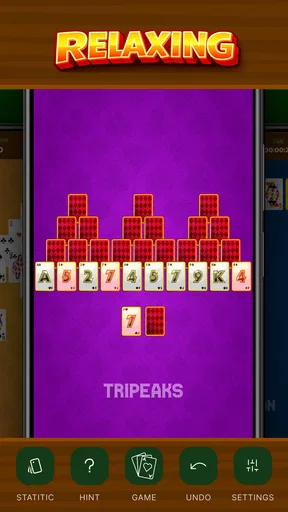
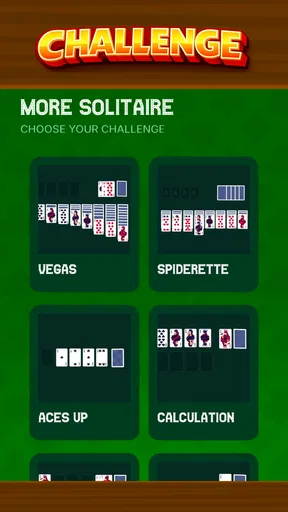
Our Review of Solitaire - Relax Card Game
 Analysis by Appyee
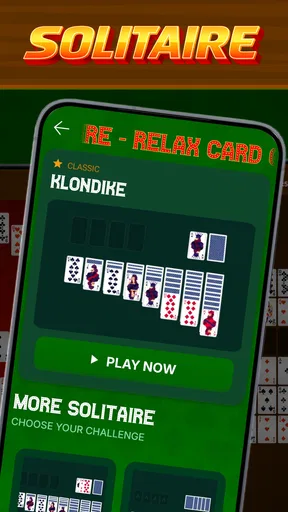
I approached Solitaire - Relax Card Game expecting the familiar patience-style card game rather than a complicated reinterpretation, and that is exactly where its appeal lies. Developed by Izanagi Production, this free card game focuses on the simple pleasure of choosing a move, watching the layout respond, clearing a path, and deciding whether to try one more deal. It is easy to understand within moments, but the small decisions still give each session enough tension to keep the routine from feeling completely automatic.
The game is listed for Everyone, which fits its straightforward presentation and gentle learning curve. It has reached over ten thousand installs and holds a 4.7 average from more than two hundred ratings, so there is already a modest group of players finding value in its uncomplicated approach. I would not treat those figures as proof that it will suit every solitaire player, but they do match my overall impression: this is a focused option for people who want cards, a clean rhythm, and very little preparation before playing.
From the first card to the first decision
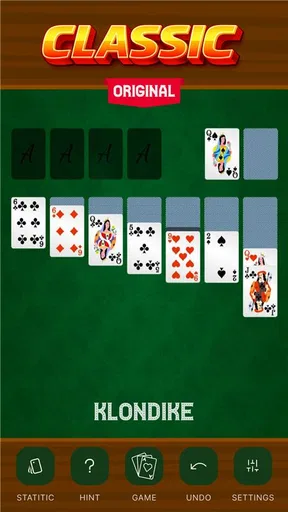
The strongest part of the experience is how quickly the first action makes sense. You look at the tableau, identify a card that can move, and tap or make the corresponding move. There is no need to learn a separate progression system before the game becomes enjoyable. That immediacy matters on a phone, where a card game often competes with a short break, a commute, or a few quiet minutes before bed.
What I like is that the opening move is rarely just a meaningless tap. Even when the correct choice seems obvious, moving one card can expose another and change the shape of the layout. That creates a compact chain of decisions: reveal a card, inspect the new possibility, then decide whether to continue building a sequence or work toward the foundations. The rules remain familiar, but the order of actions gives the board its character.
This makes the game suitable for someone returning to solitaire after a long time. A new player can learn by observing the available moves instead of studying a manual, while an experienced player can get straight to the part that matters: planning several moves ahead without turning the session into a heavy strategy exercise.
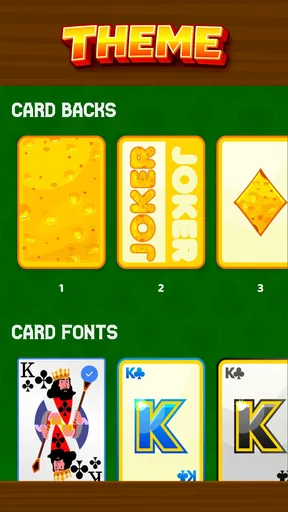
The visual themes are another useful touch. They give the cards and table a more personal feel than a completely plain interface, especially for players who expect a relaxing game to look pleasant as well as function correctly. I found the themes most useful when I wanted the game to feel like a small leisure activity rather than a purely utilitarian card simulator. They do not change the rules, but they can affect whether the app feels inviting enough to open repeatedly.
Why the opening feels better than a menu-heavy alternative
Many mobile games surround a simple card mode with missions, currencies, timed events, or layers of progression. That can be entertaining, but it also changes the reason for playing. Here, the central action stays visible: arrange cards, uncover information, and search for the next legal move. For me, that focus is a benefit when I want a quiet mental reset instead of another system to manage.
The trade-off is equally clear. If you want competitive leaderboards, a campaign, multiplayer pressure, or a large collection of modes, this will probably feel limited. Its identity comes from keeping solitaire recognizable. Players who enjoy the traditional structure should appreciate that restraint; players who need constant novelty may lose interest sooner.
The feedback rhythm keeps a small board engaging
A good solitaire game depends on feedback more than it first appears. Every move should tell you something: a card has been uncovered, a sequence has opened, a foundation has advanced, or the remaining choices have narrowed. In this game, the smooth presentation supports that rhythm. The response after an action helps me understand whether I have created a useful opening or merely moved cards around without improving the position.
That rhythm is important because the board itself is the reward system. There is no need for a dramatic interruption after every successful move. The satisfaction comes from seeing a blocked column become available, recognizing a sequence that can be transferred, and gradually reducing the clutter on the table. The feedback is quiet, but it gives each decision a consequence.
I also found that this makes the game work well for different attention levels. When I am tired, I can follow the visible opportunities one at a time. When I have more concentration, I can pause before committing a move and consider what it will reveal. The same layout therefore supports both light play and more deliberate planning, although it never becomes a deep strategy game in the way a complex deck-builder or competitive card title can.
One practical habit improves the experience: before moving a card to a foundation, I try to check whether it is needed to uncover a hidden card or continue a tableau sequence. That small pause prevents the common mistake of making a move that looks productive but removes flexibility. It is a particularly useful approach when several legal moves are available and the board does not immediately show which one is best.
Using the game as a short everyday break
A realistic use case is a ten-minute pause between tasks. I can open the game, make a few careful moves, and stop after a natural turning point instead of being pulled into a long progression track. The action is quiet enough for a waiting room or a break at home, and the rules are familiar enough that I do not need to rebuild my understanding every time I return.
It can also work before sleep if I keep the session casual. The repetitive card movement gives my attention something narrow to follow, though players who find any puzzle-like decision-making stimulating may prefer a less active relaxation method. That is one of the app’s important boundaries: “relaxing” describes the presentation and pace, not a guarantee that every session will feel effortless.
For a parent looking for an age-appropriate card game, the Everyone rating and uncomplicated rules make the concept approachable. Still, I would describe it as a game to play together or independently rather than an educational tool. Its value is in pattern recognition, patience, and light planning, not in presenting lessons or structured instruction.
Small rewards build toward the next attempt
The main reward is the gradual transformation of the board. At the beginning, the layout can look crowded and uncertain. After a few good decisions, the available space opens, hidden cards become visible, and the foundations start to look attainable. That visual change is enough to create momentum without requiring a separate reward track.
I particularly enjoy the moment when a move solves two problems at once: it advances a sequence while exposing a card that was blocking another column. Those moments make the game feel more thoughtful than simply placing whatever is currently legal. They also explain why a familiar solitaire format can remain replayable. The rules do not change, but the order in which opportunities appear changes the quality of the session.
The beautiful card themes contribute to this reward indirectly. A successful run looks more satisfying when the table is easy on the eyes, and a clean finish feels like the completion of a small visual arrangement. I would not choose the game solely for customization, but the themes help distinguish it from a bare-bones implementation that treats the cards as nothing more than symbols.
There is also a useful emotional balance in the way the reward arrives. A win is satisfying, but a near-successful layout can still teach me something about sequencing. When a session stalls, I can usually identify the point where I spent a useful card too early or failed to preserve access to a column. That makes a restart feel purposeful rather than purely frustrating.
Where the reward may feel too modest
Players who need visible achievements, unlockable content, or a strong sense of long-term progression should set expectations carefully. The attraction here is the card loop itself, not a broad meta-game. I see that as a strength for focused play, but it also means the app may not hold attention for someone who measures enjoyment through collecting rewards or comparing performance with others.
Likewise, the familiar rules can become repetitive if you play for long stretches. The smoothness that makes a short session comfortable does not automatically provide enough variety for an extended sitting. I would rather play a few rounds, pause, and return later than expect this single card format to replace a larger library of games.
The reset is part of the design, not a failure
Solitaire works because a finished or blocked board naturally creates a reason to begin again. In this game, resetting does not feel like abandoning progress in a larger campaign. It means accepting that the current arrangement has reached its useful limit and giving the next layout a fair chance. That clean break is one of the reasons I can use it in short intervals.
A good reset also changes my mindset. During a session, I am focused on preserving options and reading the board. Afterward, I can review the turning point briefly, then let it go. There is no need to carry a complicated inventory or remember a long quest objective. The next deal returns the attention to the present layout.
My advice is not to restart at the first sign of difficulty. Some boards look blocked because the obvious move is not the helpful one. I usually scan for cards that can be uncovered, check whether a low card is needed to open a foundation, and only then decide whether the position is genuinely exhausted. This makes the reset more meaningful and improves the planning side of the game without adding artificial complexity.
On the other hand, a player who wants guaranteed solvability or extensive control over the deal may find the reset loop less satisfying. The appeal depends partly on accepting uncertainty and working with the layout in front of you. If you prefer puzzles with a clearly defined solution path, a dedicated logic game may offer a stronger sense of control.
How it compares with usual solitaire choices
Compared with a basic preinstalled solitaire option, this game’s clearest advantage is its more polished visual identity and smooth card handling. The themes make it feel less like a utility and more like a deliberately designed leisure app. Compared with feature-heavy solitaire collections, its advantage is focus: you can concentrate on the board without navigating a large set of modes or distractions.
The compromise is breadth. A larger solitaire package may be better if you want several rule variations, daily challenges, statistics, or social competition. A traditional physical deck may be better if you want to play away from a screen or enjoy physically dealing and gathering the cards. This mobile version is most convincing when convenience and presentation matter more than variety.
It is also worth considering the kind of feedback you prefer. Some alternatives make every achievement prominent with sounds, celebrations, and progress markers. This game’s appeal is quieter and more self-contained. I would recommend it to someone who wants the board to remain the center of attention, not to someone looking for constant stimulation.
Who should install it and who should pass
I think this is a strong fit for casual card players, people who already enjoy classic solitaire, and anyone who wants a free game that can be understood immediately. The current version, 1.0.6, presents the experience as a focused and approachable choice rather than an oversized gaming platform. Its minimum requirement of Android 9 also places it within reach of many relatively recent devices, while keeping the practical setup straightforward for compatible users.
I would also recommend it to players who value a calm visual style and short, repeatable sessions. The best experience comes when you enjoy making small decisions and watching the layout improve. If your ideal game is something you can open without preparation, play at your own pace, and leave after a natural stopping point, this format makes sense.
I would skip it if your priority is multiplayer interaction, deep deck construction, a large number of card variants, or a demanding competitive ladder. I would also look elsewhere if you dislike replaying a familiar ruleset or need a strong achievement system to stay motivated. The app does not need those elements to work, but their absence matters if they are central to your idea of value.
Because it is free, the decision is relatively easy for curious solitaire fans: try the core loop and judge whether the visual polish and smooth play justify keeping it installed. The more important question is not whether the rules are new—they are intentionally familiar—but whether this particular presentation makes you want to deal another hand.
My verdict on the complete loop
The loop is clear and satisfying: I make a move, receive immediate visual feedback, uncover a new possibility, gradually improve the board, and then either complete the arrangement or reset when the position has run its course. The reward is not a complicated prize; it is the feeling that a few careful decisions turned disorder into progress. That is enough to make another session appealing, especially when I only have a short amount of time.
The best reason to play is its balance between instant access and light planning. It does not overwhelm the familiar solitaire structure with extra systems, and its beautiful themes give the table a warmer personality than a purely functional card app. The experience is smooth, readable, and easy to return to after a break.
My reservations are mostly about scope. Long sessions may expose the limited variety, and players searching for competition or extensive progression should choose a broader alternative. Even so, for a free, focused card game from Izanagi Production, I find the restraint convincing. I would recommend it to a friend who wants a dependable way to fill a quiet moment, provided that friend enjoys the simple pleasure of solving one layout, resetting, and seeing what the next deal offers.
Verdict
Strengths of Solitaire - Relax Card Game
- Simple rules make it easy for beginners to start playing.
- Offline mode lets you enjoy games without Wi-Fi or mobile data.
- Short rounds fit well into quick breaks or daily commutes.
- Smooth controls make card placement comfortable on touchscreens.
- Relaxing gameplay can help pass time without demanding full attention.
Limitations of Solitaire - Relax Card Game
- Frequent ads may interrupt play, especially between completed rounds.
- Some features or themes may require in-app purchases to unlock.
- Limited game variety could become repetitive for experienced players.
- Progress may not transfer easily when switching to another device.
- Background music and sound effects may feel repetitive over time.
Similar Picks in This Category
View All
Solitaire - Classic Card Games
MobilityWare4.6

UNO!™
Mattel163 Limited4.3

Spider Solitaire: Card Games
MobilityWare4.6

Solitaire.com - Classic Cards
Tripledot Studios Limited4.7

Plants vs. Zombies™ Heroes
ELECTRONIC ARTS4.1

Hearthstone
Blizzard Entertainment, Inc.4.1
Frequently Asked Questions
What is Solitaire - Relax Card Game?
Solitaire - Relax Card Game is a casual card game based on the classic Klondike Solitaire format. After trying it, I found the experience focused on simple controls, short sessions, and a calm presentation rather than competitive multiplayer. Players arrange cards in descending order with alternating colors and build each suit from Ace to King. It is suitable for relaxing breaks, although the exact features may vary by version and device.
Is Solitaire - Relax Card Game free to download and play?
The game can generally be downloaded and played without an upfront purchase, making it accessible to users who want a traditional Solitaire experience. However, free versions may include advertising, optional purchases, or extra features that require payment. Before installing, check the current store listing for details about ads, in-app purchases, subscriptions, and whether any gameplay tools or cosmetic options are restricted.
Does the game work offline?
Solitaire - Relax Card Game is primarily designed as a single-player card game, so many of its core features may remain available without a constant internet connection. Offline access can be useful during travel or when mobile data is limited. Nevertheless, advertisements, cloud synchronization, rewards, updates, and certain optional services may require connectivity, so test the game once online before relying on it offline.
Is Solitaire - Relax Card Game suitable for beginners?
Yes, the game is generally approachable for beginners because Solitaire rules are easy to understand and the interface is built around tapping or dragging cards. New players can learn by following the available hints or undo options, if included in their version. Experienced Solitaire users may also enjoy it for quick sessions, although the level of challenge depends on the deal settings and available game modes.
Does Solitaire - Relax Card Game collect personal data?
Data practices depend on the developer, platform, and current version of Solitaire - Relax Card Game. The app may collect information related to advertising, analytics, device performance, or purchases, while some versions may request additional permissions. Before downloading, review the privacy policy and the Google Play or App Store data-safety section. Pay particular attention to tracking, third-party sharing, and whether account registration is required.
Play our best games!


